


EN 
You have the feeling that, despite constant commitment, your progress in the weight room is blocked? The reason could literally be in the palm of your hand. Using the Smartphones in the gym during recovery is a habit that alters deeply the quality of your workout.
It is not a question of demonizing the Technology: Timers, music and digital cards are very useful tools. The real problem is passive scrolling. In this article, we'll find out why Getting lost on social media between a bench press and a squat sabotages your results, to motor and cognitive level, and how to regain control of your time.
During rest between sets, the body is not on stand-by at all. The pause is an integral part training: the central nervous system recovers energy, the muscle phosphocreatine is resynthesized and, above all, the brain consolidates the motor pattern just performed. As in calisthenics, the mind-muscle connection is built precisely in these moments.
But what if in those seconds Do you grab the phone? A well-known psychological and cognitive phenomenon comes into play as attention residue, studied by researcher Sophie Leroy of the University of Minnesota. In summary, when you move from one activity to another, a part of your attention remains anchored to the previous task. Consequently, starting A complex series with the mind still fragmented by a video or an email drastically lowers your yield. It's a form of cognitive overload fueled by the Zeigarnik effect, which turns unread notifications into "open tasks" that drain mental energy.
Added to this is the impact of social media on the brain. Platforms like Instagram and TikTok are Designed to offer variable and unpredictable rewards: after a discharge quick and easy dopamine from scrolling, the stimulus of physical exercise is suddenly less attractive and much more tiring. This explains the typical drop in Motivation in the middle of training.
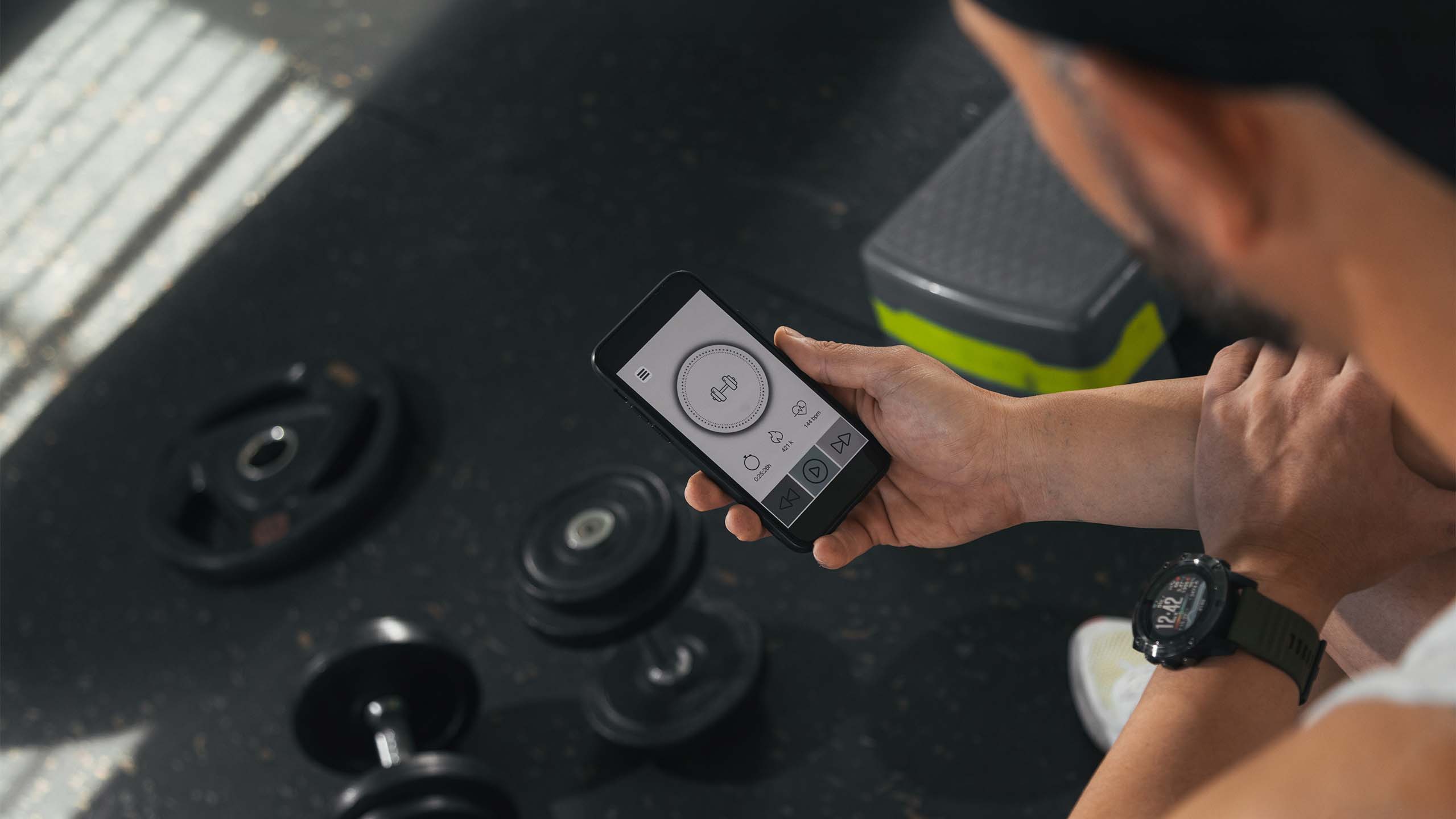
The point is to use it in a way that smart smartphone in the gym. The phone is a tool formidable for recording loads or tracking times. The secret is to use the dedicated screen: activate the "do not disturb" mode, mute notifications and keep only the timer app in view.
In breaks, replace the screen with a mental micro-reset. Use slow nasal breathing to promote parasympathetic activation and faster recovery. Look far ahead to unload your shoulders and use self talk to view the next execution, using the same mechanisms climbers' mental aspects in bouldering.
If you feel the compulsive need to external stimuli, is often a symptom of a mind that arrives at training already tired. S-Nap Shot can help you refocus your mental clarity: thanks to functional ingredients such as arginine, ginseng and other superfoods, It offers a gradual activation without added sugar. Insert it into your preparation ritual, buy brain fuel on Amazon from this link.
For those who want a more drastic, there is always the "phone in your bag" method: leave it in your backpack and rely on the wall-mounted stopwatch in the room. Try it for two weeks and see how the perceived quality of your sessions changes.
In a day constantly fragmented by multitasking, An hour of total focus on training without screens is a rare opportunity. The gym becomes a space to train even individual attention and in addition to the muscles. It is a practice that rekindles the Default Mode Network in a similar way to when we walk without a device in our hands.
The benefits of this mindfulness transfer quickly. The ability to tolerate fatigue in a session without seeking refuge in scrolling reflects positively on the ability to maintain focus in work and study. You learn to living empty moments as real recovery breaks.
Try it too. Do this experiment: for just one week, train without opening social media during the recoveries. Observe your sensations, how your muscles respond and how your loads change. Often, to unlock the performance, all you need to do is simply look up from the screen.
Listening to music is a great strategy to promote isolation and concentration on training. The problem arises if you continuously unlock the screen to skip songs, risking open messaging apps. The best solution is to create a playlist that covers the entire duration of the workout.
There is no universal time: we go from 60-90 seconds for hypertrophy to 3-5 minutes for strength exercises maximum. Training without a phone allows you to develop your proprioception, teaching you to listen to the heartbeat and rhythm of the breath to understand when the nervous system is really ready for the series next.
The most effective and exempt alternative from distractions is the good old paper notebook. A small notepad and a pen allow you to quickly record loads, repetitions and sensations in a few seconds, keeping the mind anchored exclusively to the work you are doing.