


EN 
Ergonomics is the discipline that studies how the interacts with work tools to minimize mental load and maximize performance. Focuses on resource management of the brain, unlike physical ergonomics, which instead takes care of the posture and the chair.
For those who work in the office or study, the clutter on the desk (technically referred to as visual clutter) represents a direct functional obstacle. A chaotic workplace It is not only an aesthetic problem, but a continuous source of visual noise that drains neural energies, drastically reducing the ability to concentration and increasing perceived stress during the day work.
Why a desk full of items useless fatigue the mind? The answer lies in the functioning of the visual cortex. The human brain possesses a processing capacity and treats every object in the visual field as a stimulus to be process.
Neuroscientific studies, such as those conducted by Princeton University, show that disorder competes with the main task for the attention of the brain. Every scattered sheet, empty cup or tangled cable sends a signal that the brain needs to actively suppress to stay focused on the monitor. This process of continuous filtration consumes glucose and metabolic resources, bringing the to early mental fatigue and a measurable drop in productivity, regardless of the difficulty of the task performed.
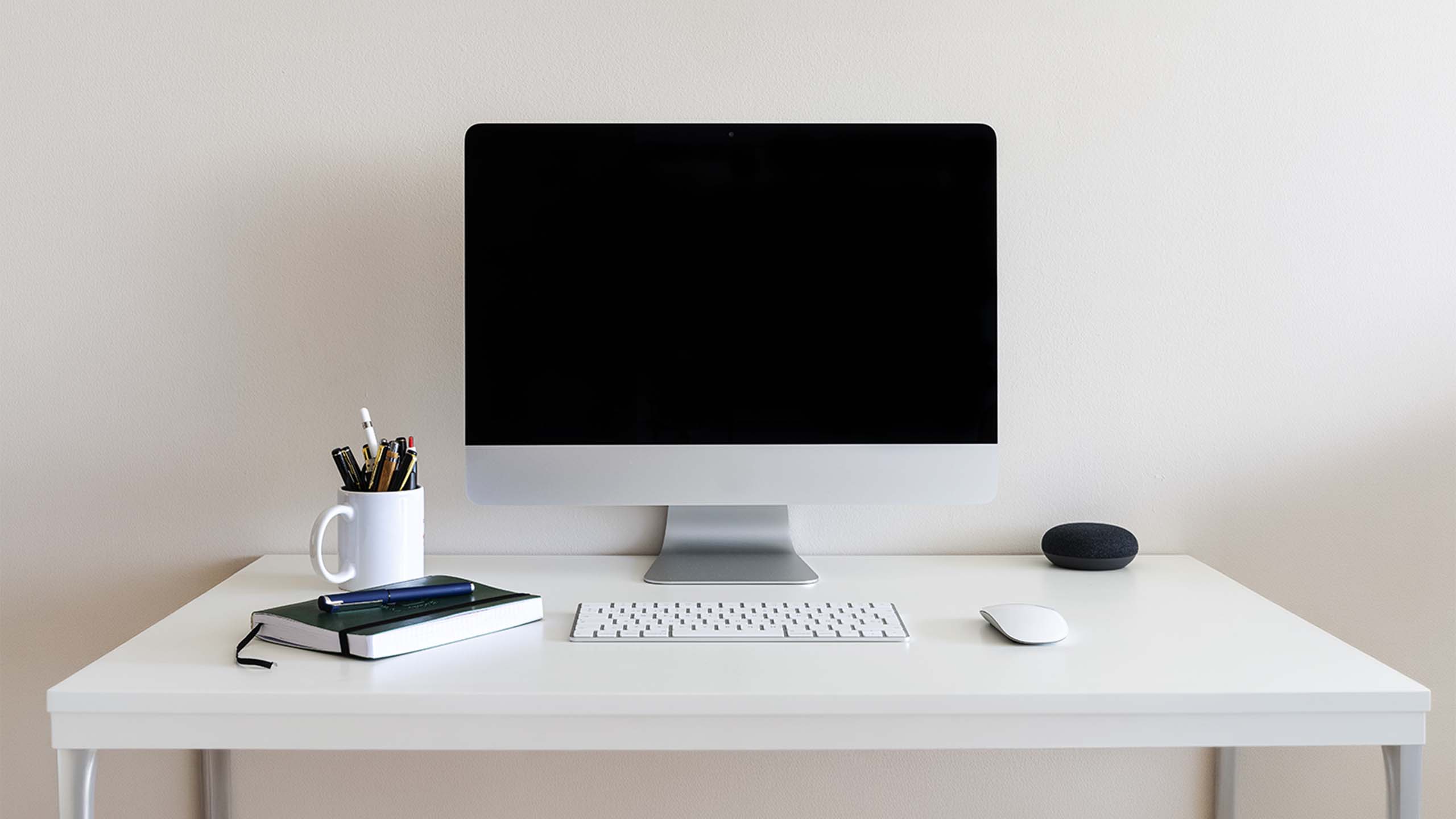
To apply cognitive ergonomics at your workstation, simply organize the space according to the frequency of use, creating "flow zones". This reduces friction decision-making and motor skills. Here's how to divide your desk by Maximize focus:
The brain does not Distinguishes between physical and digital clutter: both are stimuli that require attention. A full computer desktop of icons, downloaded files, and screenshots has the same negative impact as a chaotic physical desk. Cognitive ergonomics necessarily applies even to virtual space.
Working with 20 browser tabs open or an email account with hundreds of unread messages creates a residue of Attention: a part of the mind remains anchored to those incomplete tasks, preventing full immersion in the work being done. Close the unused applications and adopt a digital archiving system clean is a fundamental act of mental hygiene.
Sure, a desk and a desktop perfectly ordered are of little use if the biochemistry of the brain is in disorder. To maintain the mental order gained by decluttering, it is necessary to It is essential to nourish the brain properly. The use of drinks Functional nootropics with no added sugar can support the Focus neurotransmitters cleanly and constantly: recharge the mind with brain fuel.
There is a kernel of truth: an environment chaotic can encourage the brainstorming phase and the generation of new ideas. However, When you move on to the execution and synthesis phase, the disorder becomes a obstacle. The ideal solution is to alternate or have dedicated spaces.
Don't try to do everything at once. Start by clearing only the primary area, i.e. the space in front of you. This alone drastically reduces the visual cognitive load.
The ideal is to apply the rule of 5 minutes at the end of the day. Restoring order before disconnecting helps to mentally close the working day and find a welcoming environment the next morning.