


EN 
When we are under pressure, the body reacts instinctively. In situations such as before an exam, during a tight work deadline or While we manage an unforeseen event, the heartbeat accelerates, the muscles they tense and the breath becomes short, fast and thoracic. It is an answer physiological: the brain perceives a danger and diverts resources towards the physical survival, inhibiting higher cognitive functions such as concentration, memory and problem-solving.
In this state, regain focus with willpower alone it is biologically ineffective. So how increase concentration? Specific breathing techniques can Helping us: the most powerful mechanism for regulating our mental energy is literally under our noses. Mindful breathing sends a signal safety to the brain and can modulate the nervous system autonomous in a few minutes.
The link between mind and breathing is bidirectional. If stress alters your breathing, voluntarily change your breath Breathing rhythm can hack the stress response. The key mechanism resides in the vagus nerve, the main component of the nervous system parasympathetic, which plays a bit of the role of braking our body.
Every time we exhale slowly stimulate the vagus nerve, which in turn sends the signal to the heart slow down and the brain to relax. On the contrary, inhalation Rapida activates the sympathetic system, which instead represents the accelerator. By learning to control these two times, we can better oxygenate the prefrontal cortex and lower cortisol levels, the hormone that, if in excess, clouds the mind.
Activating the mind in the right way is fundamental: in addition to breathing, irreplaceable support is represented by the functional drink for concentration: Discover brain fuel.
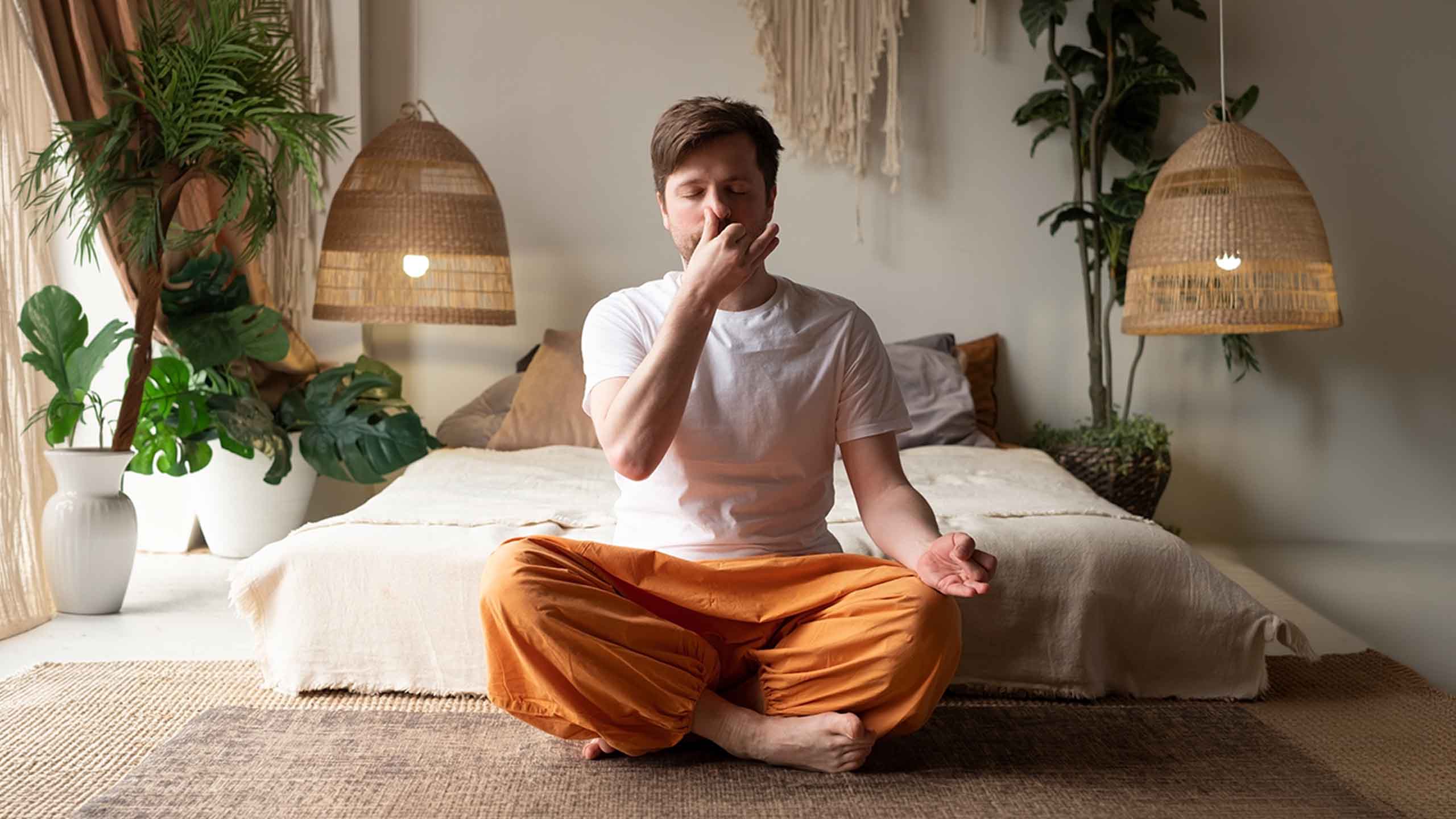
Less stress, anxiety and more: here are the 5 Most Effective Breathing Techniques Validated by Science for Different cognitive needs.
The box technique breathing is used by Navy SEALs to maintain lucidity in high-risk situations and is ideal for stabilizing the mind before a difficult task, such as before an important meeting or a particularly intense study session.
How to Does square breathing? Imagine walking along the sides of a square. Inhale for 4 seconds, hold your breath with full lungs for 4 seconds, exhale for 4 seconds seconds, hold empty lungs for 4 seconds.
If anxiety prevents you from starting work or falling asleep in the evening Before an important event, try to breathe in silently through your nose for 4 seconds, then hold your breath for 7 seconds and exhale forcefully through your mouth (making a hissing sound) for 8 seconds.
What it is used for The 4-7-8 method? Developed to promote deep relaxation, It acts as a natural tranquilizer for the nervous system.
Made famous according to recent studies by neuroscientist Andrew Huberman, it is the fastest technique absolutely to lower nerve activation in real time. The sigh physiological is perfect during a moment of sudden panic or acute frustration.
Here's how It works: Perform two rapid, consecutive inhalations through your nose (the second will be shorter to fill the lungs as much as possible), followed by a long prolonged exhalation from the mouth.
It is the basis of correct breathing. Move the work away from the accessory muscles of the neck and of the chest (often contracted) to the diaphragm. How breathing is done diaphragmatic? Place one hand on your belly and one on your chest. Inhale trying to inflate only the belly, leaving the chest motionless. Exhale deflating the belly.
È It is advisable to put it into practice constantly, even while working on the desk to maintain constant cerebral oxygenation.
Ancient yoga technique used to balance activity of the two cerebral hemispheres. Ideal when you feel the need to have a greater mental centering.
Here's how Practice alternating nostril breathing: close the nostril right with your thumb and inhale from the left. Then close the left with ring finger, open your right hand and exhale. Finally inhale from the right, close, and exhale from the left.
Absolutely Yes. Most of these techniques (except perhaps those that require the use of the hands on the face) are invisible to others and can be performed even in the office or library.
Yes, it can happen if you hyperventilate or drastically change your intake of oxygen/carbon dioxide. If this happens, return to breathing normally for a few minutes. The practice must be gradual.
There is no limit, but perseverance rewards. For example, start your day with 3 minutes of box breathing and using the physiological sigh when needed is an excellent point of departure.